CFTC Extends Relief to Self-Custodial Wallet Software: What It Covers

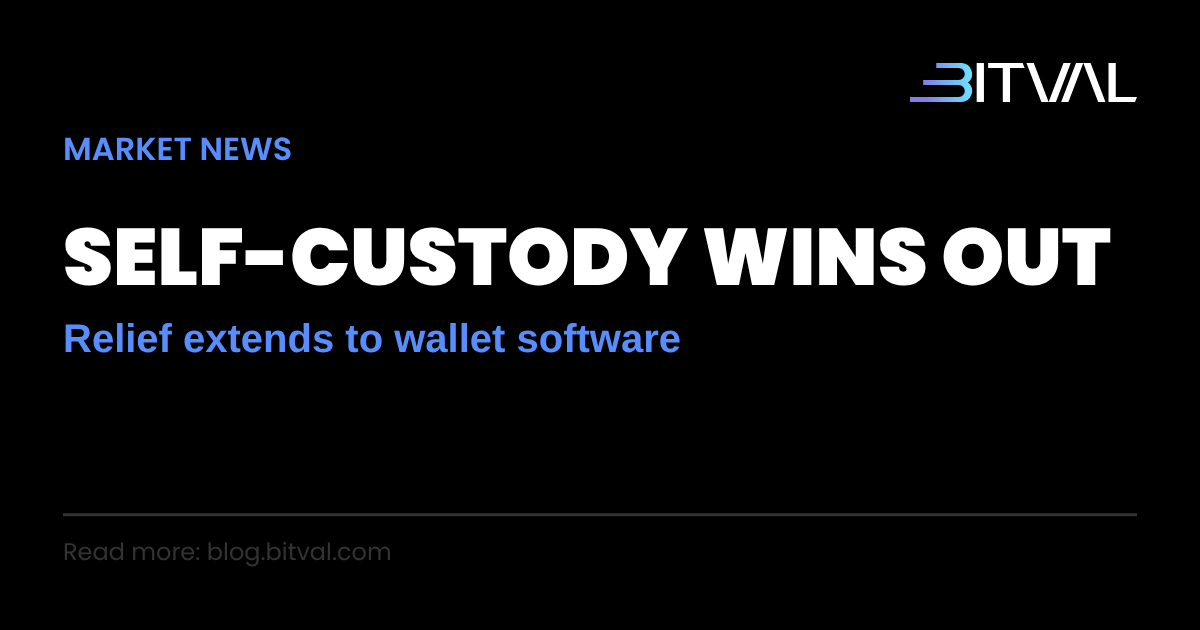
The Commodity Futures Trading Commission has extended no-action relief, originally granted to one software provider, to passive software providers more broadly, including self-custodial crypto wallet applications that let users access CFTC-regulated derivatives such as event contracts and perpetual contracts on designated exchanges. It's a narrow, technical move, but it clarifies something that's mattered for a while: how wallet software fits into a regulatory framework built around exchanges and intermediaries.
What "Passive Software Provider" Means Here
A passive software provider builds front-end interface software, the app or interface a user interacts with, without itself taking custody of funds, executing trades as an intermediary, or controlling user assets. Self-custodial wallets fit this description because the user holds their own private keys and the wallet is simply the interface for interacting with markets, rather than a party standing between the user and the trade, unlike a centralised exchange such as Bitval, which does hold custody of funds while they sit on the platform.
Why This Distinction Matters for Regulation
Most financial regulation is built around intermediaries: exchanges, brokers, and custodians who hold assets or execute trades on a client's behalf. Self-custodial software doesn't fit neatly into that model, since no intermediary is holding funds or making trading decisions for the user. Extending no-action relief to passive software providers is an acknowledgement that this category needs different treatment than a traditional intermediary would receive.
What "No-Action Relief" Does
A no-action letter means CFTC staff won't recommend enforcement action against the specific, narrowly described activity covered, without changing an actual rule. It gives passive software providers a defined, if not permanent, basis to operate without full intermediary-style regulatory obligations, while the broader question of how to formally classify this kind of software continues to develop.
Why This Extends Beyond One Company
Extending relief that originally applied to a single provider, to the whole category of passive software providers, gives the broader self-custodial wallet ecosystem a clearer regulatory footing rather than leaving every other provider to seek individual relief. That's a far more scalable approach for an ecosystem that includes many wallet providers, not just one.
What to Watch
Whether this no-action relief eventually becomes a formal rule, and how broadly "passive software provider" ends up being defined in practice, will determine how much protection self-custodial wallet builders have long-term. Self-custody and exchange custody involve different tradeoffs, and clearer rules around self-custodial software affect that comparison regardless of which exchange, Bitval included, a user ultimately trades on.
You can create a Bitval account to begin your journey into crypto.
This article is for informational purposes only and does not constitute financial advice. It summarises a regulatory no-action letter, not a completed rule.