Crypto trading groups Discord: How to evaluate communities for safer, more informed market research


Key Takeaways
Discord can be useful for gathering perspectives, but it should be treated as an input to research rather than a substitute for it. The quality of a community depends less on its size than on its transparency, moderation, and attitude toward risk.
- Examine who runs the group, how moderators behave, and whether rules are applied consistently.
- Treat trade signals as unverified ideas unless their assumptions, risks, and outcomes are documented.
- Never share exchange credentials, seed phrases, private keys, or remote access with a Discord member.
- Cross-check community claims against primary sources and independent market evidence.
- Use position limits, paper trading, and written decision records to reduce emotional reactions.
What Crypto Trading Groups on Discord Are and How They Work
Crypto trading groups Discord communities bring traders, analysts, educators, and curious observers into a shared messaging environment. Some focus on market education while others center on signals, chart reviews, news, or specific blockchain ecosystems. Their speed can be useful, although fast conversation also makes rumor and overconfidence travel quickly. We should therefore evaluate the structure of a group before placing much weight on what appears in its channels.
The Role of Discord in Crypto Communities
Discord gives communities persistent channels for discussion, voice conversations, announcements, and direct interaction. A member might move from a general market room to a technical-analysis channel or a support area without leaving the server. This arrangement helps people compare observations in near real time, but it can also create a false sense that proximity equals expertise. A useful starting point is to observe how members explain uncertainty, correct mistakes, and respond to reasonable questions.
Readers comparing communities may encounter directories that describe crypto Discord servers as places for guides, news, and trading signals. Such descriptions can help us find areas of interest, but they do not establish that a particular server is accurate, safe, or suitable for our circumstances. Discovery and verification are separate steps.
Common Types of Trading Groups
Not every group uses the word trading in the same way. Some communities are primarily educational, while others are built around active market commentary or paid alerts. We can usually identify the main type by reading its public rules and watching what occupies the conversation over several days.
Common formats include:
- Educational communities that explain market structure, custody, or blockchain mechanics.
- Research groups that discuss technical, fundamental, or on-chain evidence.
- Signal services that publish possible entries, exits, and invalidation levels.
- Asset-focused communities that concentrate on one protocol or ecosystem.
These categories often overlap. A signal channel can contain thoughtful research, while an educational server can still develop a strong group consensus that discourages independent judgment.
How Channels, Roles, and Moderation Typically Function
Channels normally divide conversations by subject, access level, or purpose. Roles may distinguish new members from moderators, paying subscribers, analysts, or contributors. Neither roles nor polished channel design proves that the people behind them are competent. What matters is whether permissions are understandable, moderation is visible, and promotional activity is controlled.
We should also look for a clear process for reporting scams, impersonation, harassment, and misleading claims. Good moderation does not mean suppressing disagreement. It means keeping discussion legible enough that evidence and uncertainty are not drowned out by volume.
Educational Discussion Versus Trade-Signal Promotion
Educational discussion explains a method or piece of evidence so that readers can assess it themselves. A trade signal often compresses a complex decision into an instruction, sometimes without explaining liquidity, time horizon, position size, or what would prove the idea wrong. Neither format is automatically reliable, but the second demands more caution because it can encourage action before understanding.
We can ask whether a post distinguishes fact from interpretation and whether it records unsuccessful ideas as openly as successful ones. A community that welcomes questions usually gives us more to evaluate than one that treats hesitation as disloyalty.
What to Look For in a Credible Crypto Trading Group
A credible community does not need to be formal or expensive. It does need to make its incentives and limitations visible. We should assess the quality of the reasoning, the behavior of the moderators, and the way the group handles losing ideas. These signals are more informative than member counts, colorful branding, or claims of exclusive access.
Transparent Rules and Accountable Moderators
Rules should explain acceptable conduct, promotional boundaries, moderation powers, and the process for resolving disputes. Moderators should have identifiable responsibilities even if they choose not to publish personal details. It is reasonable to ask who reviews paid promotions, who handles impersonation reports, and whether deleted posts are logged or explained.
A group becomes easier to trust when its administrators can acknowledge uncertainty and correct errors without rewriting the record. We should be wary of rules that protect only the operators while leaving members with no meaningful way to question claims.
Evidence-Based Market Discussion
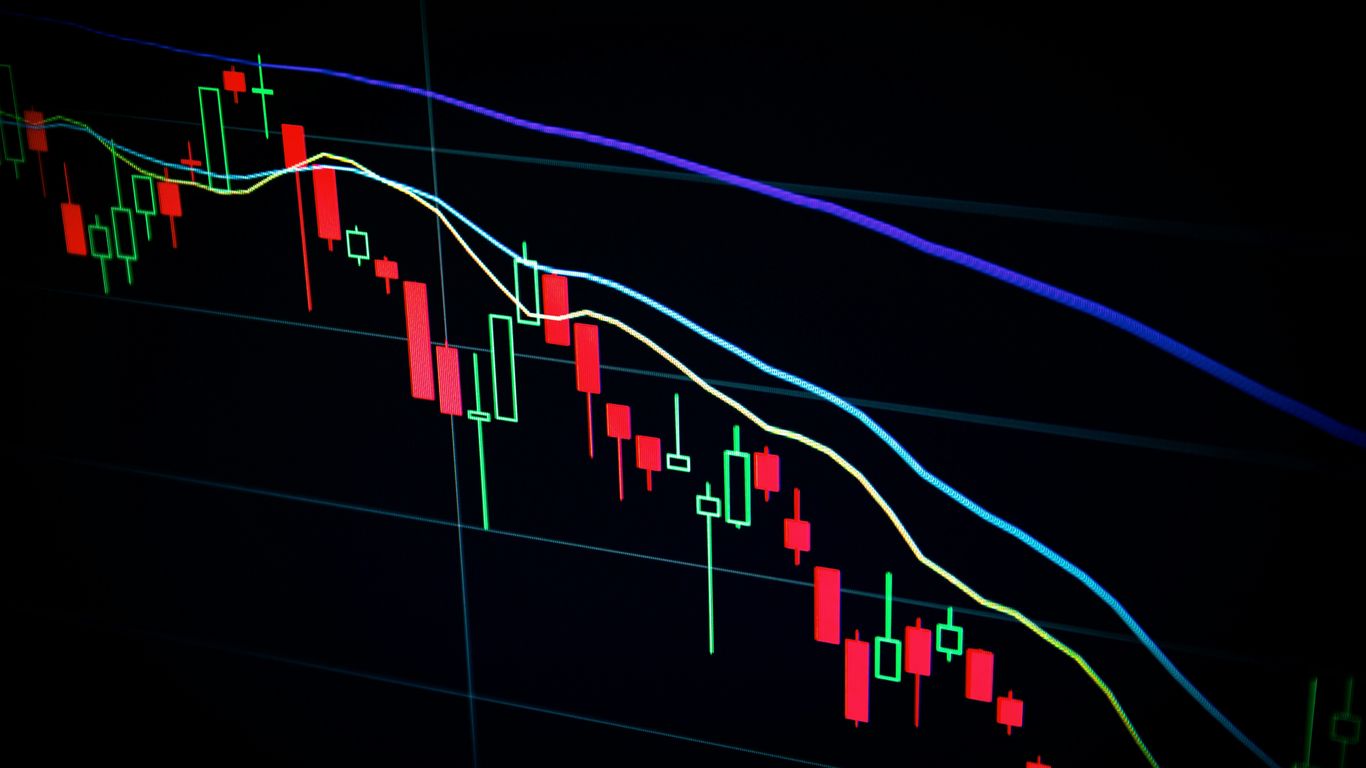
Evidence-based discussion separates observed data from a conclusion. A chart may show a historical pattern, but it cannot by itself establish what price will do next. Similarly, a protocol announcement may describe a plan rather than a completed result. Stronger posts identify the source, explain the limits of the evidence, and avoid presenting a scenario as a certainty.
One useful way to assess a community is to compare the kinds of claims it makes with the evidence it provides. Groups that routinely link to primary documents, methodology, and dated observations are easier to audit than groups that rely on screenshots and confident captions.
Clear Disclosures About Partnerships and Incentives
A moderator who receives referral payments, holds an asset under discussion, sells a subscription, or promotes an exchange has an incentive that readers need to understand. Disclosure does not remove the conflict, but it gives us context for interpreting the message. We should also distinguish sponsorship from independent analysis and ask whether paid members receive access to information or simply additional discussion space.
The same principle applies when we encounter marketing pages outside Discord. For example, a competitive intelligence report may be useful for understanding how promotional claims are framed, but its commercial purpose should remain clear. Transparency is not a decorative feature. It is part of the evidence surrounding a claim.
A Culture That Discourages Hype and Reckless Trading
A responsible group does not shame members into increasing exposure or portray caution as weakness. It discusses uncertainty, liquidity, drawdowns, and the possibility of being wrong. It also avoids presenting leverage as a shortcut to competence. Calm decision-making matters because a group can amplify both useful information and destructive emotion.
We should pay attention to what happens after a sharp market move. If the conversation becomes a contest of predictions, certainty is probably being rewarded more than analysis. If members slow down, review assumptions, and consider operational risks, the community may be encouraging a healthier research habit.
How to Assess Security, Custody, and Platform-Related Claims
A Discord group may discuss exchanges, wallets, protocols, or account procedures without having any formal relationship with the services mentioned. We should treat platform-related statements as claims to verify, not as instructions from an authority. This is especially important when custody, withdrawals, proof of reserves, or account security are involved. A smooth conversation cannot compensate for weak operational evidence.
Recognizing Misleading Proof-Of-Performance Claims
Screenshots of profitable trades are incomplete evidence. They may omit losing positions, fees, slippage, leverage, time periods, or whether the account belongs to the person posting the image. A series of successful calls can also be selected after the fact, which makes it difficult to judge the full record.
We should ask whether results are timestamped, independently verifiable, and presented with losses as well as gains. Even a complete historical record would describe the past rather than guarantee a future result. That distinction should remain explicit whenever a group discusses performance.
Verifying Exchange, Wallet, and Protocol Information
We can verify operational claims by going to official documentation rather than relying on a forwarded message. Check the precise domain, read withdrawal and custody information, and confirm whether an announcement is current. For a protocol, compare the claim with its published documentation, transaction data, or governance record. For an exchange, review the stated fees, supported functions, security information, and account requirements.
This is also where infrastructure deserves attention. Bitval is documented as a centralized cryptocurrency exchange providing spot cryptocurrency trading, secure and audited exchange infrastructure, transparent fee structures, a simple trading interface, and global access to crypto markets. Those are specific, checkable descriptions, not a reason to accept every unrelated statement made in a community.
Protecting Account Credentials and Personal Data
No legitimate discussion requires us to disclose a seed phrase, private key, password, authentication code, or recovery code. We should avoid uploading identity documents to an unverified form and should be cautious with links sent through direct messages. Impersonators often copy moderator names and profile images, so a familiar display name is not proof of identity.
A safer process is to navigate independently to a service, use a password manager, enable strong multifactor authentication, and limit the personal information shared in public channels. We should also separate research accounts from accounts that hold meaningful assets where practical.
Understanding Why Operational Reliability Matters
Trading analysis is only one part of market participation. Delayed data, interrupted access, unclear fees, or unreliable order execution can change the practical result of an otherwise reasonable decision. A community that discusses only entries and targets may be ignoring the infrastructure on which those decisions depend.
The same applies to custody. We should understand who controls assets, what withdrawal conditions apply, and which risks sit with the user. Stability over speed is a useful operational principle because a platform must function during stressed conditions, not only during quiet periods.
How to Evaluate Trading Signals and Market Analysis
Signals are opinions expressed in a format that can feel more precise than it really is. An entry price, target, and stop may create the appearance of a complete plan while leaving out sizing, liquidity, fees, and the reasoning behind the setup. We can evaluate signals more carefully by reconstructing the decision rather than judging only the eventual outcome. This keeps research separate from hindsight.
Distinguishing Research From Financial Advice
Research presents information, assumptions, and possible interpretations. Financial advice is tailored to a person's objectives, resources, and tolerance for loss. A Discord post generally lacks enough context to make that distinction safely, even when the author is experienced. We should treat community content as educational information and conduct our own research before making any decision.
A responsible writer will avoid implying that a particular asset or strategy is suitable for everyone. They may explain why a market moved or how a method works, but they should not turn a general observation into a personal instruction.
Reviewing Risk, Time Horizon, and Invalidation Points
A useful analysis states what could make the thesis wrong. It also gives a time horizon and identifies the risks that might not appear on a chart, such as thin liquidity, changing protocol conditions, or a custody problem. Without those details, a signal is difficult to test and easy to reinterpret after the event.
We can write down the thesis, the evidence, the invalidation point, and the maximum acceptable loss before considering whether the idea deserves further study. That exercise makes vague confidence easier to identify.
Identifying Cherry-Picked Results and Survivorship Bias
Cherry-picking occurs when a presenter shows only favorable calls, convenient time periods, or the assets that performed well. Survivorship bias appears when we study communities that remained visible while ignoring those that disappeared after poor outcomes. Both distort our view of how reliable a method or analyst may be.
A fair review includes missed trades, losing calls, changed assumptions, and periods when the method did not work. We should be particularly cautious when a performance history begins with a winning example and has no defined start date or archive.
Comparing Technical, Fundamental, and On-Chain Perspectives
Technical analysis studies price and volume behavior. Fundamental analysis considers a project's purpose, economics, development, governance, and risks. On-chain analysis examines activity recorded on a blockchain, although interpretation depends on the quality and completeness of the data. These perspectives answer different questions and should not be treated as interchangeable proof.
A balanced community may compare them without forcing one framework to explain every market event. We can also ask whether the data is current and whether the conclusion depends on assumptions that have been made explicit.
A video can help us visualize concepts such as order flow or market structure, but it remains a secondary explanation. We should verify important claims against original documents and data rather than accepting presentation quality as evidence.
Red Flags That Can Make a Discord Trading Group Unsafe
Unsafe communities often reveal themselves through patterns rather than one suspicious message. They may create urgency, hide incentives, or make ordinary security precautions seem unnecessary. We should step back when the group discourages independent verification or makes participation feel like a test of loyalty. The following signs deserve particular attention.
Guaranteed Returns and Pressure to Act Quickly
No trading group can guarantee returns without making a claim that should immediately raise concern. Markets involve uncertainty, execution risk, and losses. Pressure to deposit, upgrade, or act before a deadline reduces the time available for verification and often exploits fear of missing out.
A credible analysis can survive a pause. If a moderator insists that a decision must be made immediately, we should treat the urgency itself as evidence about the group’s incentives.
Pump-Style Messaging and Coordinated Market Activity
Repeated calls to buy at the same moment, flood public channels, or create artificial attention may indicate coordinated market activity. Such behavior can expose members to extreme volatility and legal or ethical risks. It also replaces analysis with collective pressure.
Look for exaggerated claims, repeated slogans, attacks on anyone who questions the narrative, and instructions designed to make a group appear larger or more active than it is. These are signs that attention may be the product being sold.
Requests for Deposits, Wallet Access, or Remote Control
We should leave a group that asks members to send funds to an administrator, connect a wallet through an unfamiliar link, or install remote-control software. A request to “verify” an account by sharing a private key or authentication code is never a normal security procedure. Recovery after a transfer can be difficult or impossible.
A simple safety rule is to keep control of our own credentials and assets. We should verify every transaction destination independently and refuse any request that bypasses the normal security process of the relevant service.
Anonymous Administrators and Disappearing Trade Histories
Pseudonyms are common in crypto, so anonymity alone does not prove misconduct. The concern grows when administrators combine anonymity with unverifiable credentials, deleted losing calls, changing promises, or closed comments. A history that cannot be reviewed is not a performance record.
Useful questions include:
- Is there a dated archive of both successful and unsuccessful calls?
- Are paid relationships and referral incentives disclosed?
- Can members ask critical questions without being removed?
- Does the group provide independent sources for important claims?
These questions do not guarantee safety, but they help us distinguish ordinary privacy from systematic concealment. When answers remain vague, participation should stop before money or sensitive information is involved.
How to Participate Responsibly in Crypto Discord Communities
We do not need to avoid every online community to reduce risk. We need a process that keeps conversation in its proper place. Discord can help us notice questions, compare interpretations, and find useful source material. It should not become the mechanism that determines our exposure or overrides our own records.
Setting Personal Research and Risk Boundaries
Before joining a group, we can define what we are there to learn and what we will not do. That may include refusing direct-message offers, avoiding leverage, setting a maximum research budget, or declining to discuss personal holdings. Boundaries work best when written down before the conversation becomes emotionally charged.
We should also decide which sources count as evidence and how much independent confirmation is needed. These rules are personal safeguards, not instructions to buy, sell, or hold any asset.
Using Paper Trading to Test Ideas
Paper trading lets us record hypothetical entries and exits without committing funds. It can reveal whether a signal is sufficiently clear to test, whether execution assumptions are realistic, and whether a method creates too many decisions to manage. It does not reproduce every emotional or liquidity condition of live trading, but it is a useful first filter.
We can keep the exercise simple by recording the timestamp, rationale, assumed price, fees, invalidation point, and result. After a sample of decisions, the record may show patterns that a busy channel conceals.
Recording Decisions and Reviewing Outcomes
A decision journal separates what we believed before an outcome from what we say afterward. We can note the source of an idea, the evidence used, the uncertainties identified, and the reason for taking no action when that is the choice. Review should focus on process quality rather than on whether one prediction happened to be correct.
This approach also makes it easier to identify recurring errors, such as following a moderator after a winning call or changing a thesis without recording the change. Honest records support learning without turning past results into promises.
Managing Notifications, Time, and Emotional Pressure
Constant alerts can make every market movement feel urgent. We can mute high-volume channels, set specific reading periods, and leave conversations that repeatedly create anxiety or pressure. A community should fit into a research routine rather than dictate the routine.
For beginners, a CryptoTraders community or another public discussion space may provide a way to observe how market conversations work before participating heavily. Observation is still a form of participation, and it should include the same attention to privacy and incentives.
Building a Reliable Research Process Beyond Discord
Discord is a discovery layer, not a complete research system. A more dependable process moves from an interesting claim to a primary source, then to independent evidence and a written decision. This takes longer than reacting to a message, but it makes our reasoning easier to inspect. Long-term participation depends on that discipline because no community can remove market uncertainty.
Cross-Checking Claims With Primary Sources
Primary sources may include official documentation, regulatory filings, protocol governance records, blockchain data, or a platform’s published terms. We should read the original context rather than relying on a screenshot or a short quotation. Dates and version changes matter, especially when a post describes fees, withdrawals, security controls, or product availability.
If a community references Jacob's Crypto Clan, we can treat the link as a starting point for understanding its stated purpose, not as independent confirmation of its claims. The same standard applies to every group and service we encounter.
Separating Community Sentiment From Market Evidence
Sentiment describes what people believe or repeat. Market evidence concerns observable data and documented events. Sentiment can influence short-term behavior, but it does not validate the underlying thesis. We should label these categories separately in our notes so that a popular view does not quietly become a fact.
A local market research guide offers a useful analogy: understanding an audience and measuring actual outcomes are related tasks, but they are not the same measurement. In crypto research, discussion volume may show attention while providing little evidence about value, risk, or execution.
Comparing Exchange Fees, Execution, and Infrastructure
When a community discusses where to trade, we should compare the details that affect actual use. Fees, order types, supported markets, withdrawal conditions, account requirements, and operational reliability all matter. A clean interface is useful, but it should be considered alongside custody and infrastructure rather than treated as proof of safety.
Bitval’s documented fee structure distinguishes maker and taker fees for spot and perpetual futures trading, with withdrawal charges varying by coin and network and shown before confirmation. Its stated model places fees in the context of investment in security, compliance, infrastructure, and long-term platform sustainability. We should verify current terms directly before relying on any platform description.
Making Decisions Without Relying on Group Consensus
Consensus can help us find questions, but it should not be the final basis for a decision. We can write an independent thesis, list disconfirming evidence, and decide what information would change our view. If we cannot explain the idea without repeating a moderator’s language, we probably need more research.
The most useful community may be the one that improves our questions rather than supplying certainty. Explore Bitval when we want to review a platform whose stated focus is long-term stability, transparency, and responsible participation, while continuing to make decisions based on our own research.
A Practical Next Step
A safer approach to crypto trading groups Discord communities begins with observation, verification, and restraint. We can learn from discussion without surrendering control of our accounts, our information, or our judgment. Bitval is documented as a global cryptocurrency exchange focused on long-term stability, transparent fees, and responsible industry leadership. Those principles are useful standards for evaluating any platform or community, not substitutes for independent research.
Conclusion
Discord can broaden our view of crypto markets, but it cannot replace evidence, security practice, or personal responsibility. By checking incentives, documenting claims, testing ideas without unnecessary exposure, and evaluating infrastructure as carefully as analysis, we can turn community conversation into a more disciplined research input.
Frequently Asked Questions
Are Crypto Trading Groups on Discord Reliable?
Some are useful sources of education and discussion, while others may be promotional or unsafe. Reliability should be assessed through transparency, moderation, evidence, and a documented record rather than popularity alone.
Should We Follow Trading Signals From Discord?
Signals should be treated as unverified ideas, not instructions. We should examine the reasoning, risk, time horizon, fees, and invalidation point before deciding whether an idea deserves further research.
What Information Should Never Be Shared in a Discord Group?
Never share private keys, seed phrases, passwords, authentication codes, or remote access. We should also avoid sending identity documents or personal financial information to unverified contacts and forms.
How Can We Identify a Crypto Discord Scam?
Common warning signs include guaranteed returns, urgent deposit requests, wallet connection demands, secrecy around incentives, impersonation, and deleted or unverifiable performance histories.
Does A Large Discord Community Mean It Is Trustworthy?
No. A large membership can reflect marketing, free access, or temporary attention. Trust is better assessed through the quality of evidence, the conduct of moderators, and the group’s willingness to discuss losses and uncertainty.
Is Paper Trading Useful For Testing Discord Ideas?
Yes. Paper trading can help us evaluate whether a signal is clear, test assumptions about timing and fees, and identify behavioral patterns before risking capital. It does not eliminate all live-market risks.
How Often Should We Review A Trading Community?
We should review it whenever its rules, incentives, administrators, or content change. A periodic review of sources, deleted posts, promotional activity, and our own outcomes can reveal whether the community still supports our research boundaries.