Harmony Is Shutting Down Its Mainnet: What the Migration to Ethereum Means

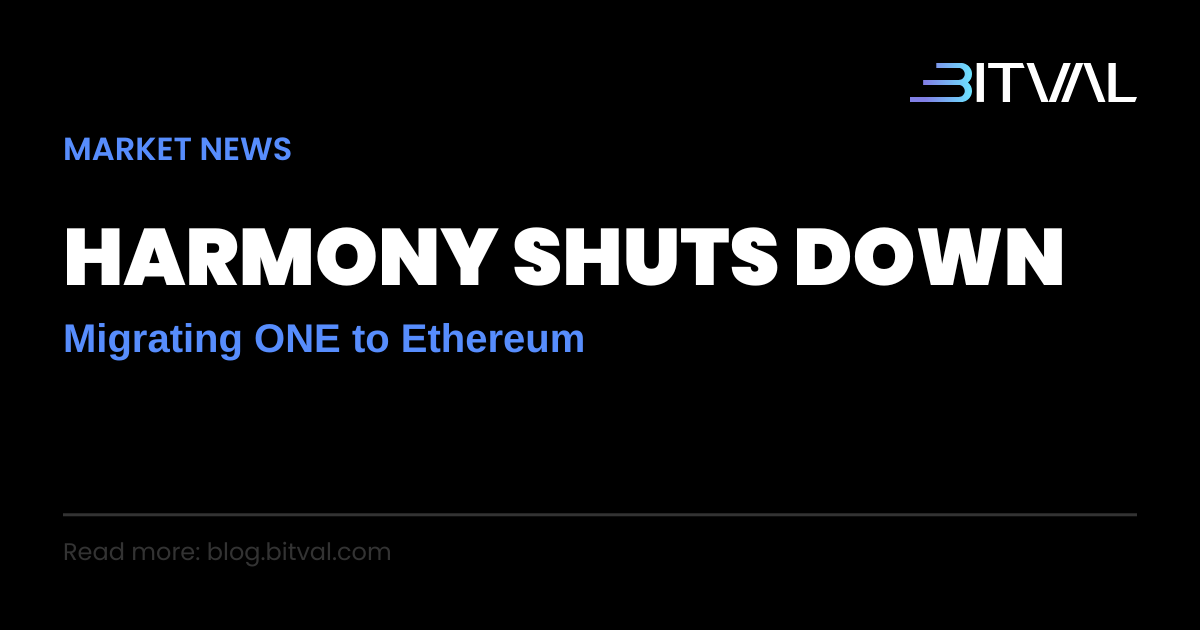
Harmony has announced plans to shut down its mainnet and migrate its native token, ONE, to Ethereum, following a final-block snapshot and airdrop process. It's a notable example of a Layer 1 blockchain winding down its own infrastructure rather than continuing to operate independently.
What's Happening
The process involves Harmony taking a snapshot of token balances on its existing chain at a specific block, then issuing an equivalent token on Ethereum through an airdrop to holders based on that snapshot. Once the migration completes, the original Harmony mainnet stops operating as an independent chain. This is a different kind of event from an exchange shutdown or a project simply going quiet, since it's a deliberate, announced technical transition with a defined process for existing holders.
Why a Chain Shuts Down Its Own Mainnet
Running an independent Layer 1 blockchain requires ongoing validator participation, security investment, and developer activity to stay resilient. When that ecosystem shrinks, a project sometimes decides it's better served by migrating to a more established chain like Ethereum, which offers a larger validator set and more built-in security, rather than continuing to maintain infrastructure that's become harder to secure on its own. Harmony's stated reasoning cites security concerns tied to state-level actors and AI-driven threats, which reflects a broader pattern of smaller chains facing higher relative security costs than larger ones.
What This Means for Holders
Anyone holding the original token needs to track the official migration process closely, since claiming an airdropped replacement token typically requires action within a specific window and through official channels only. Migrations like this are also a common target for scams, with fake "migration" sites or wallet-draining links appearing anytime a token switch is announced. Verify any migration instructions through the project's official channels before connecting a wallet or signing anything, whether you hold the token on Bitval or elsewhere.
The Broader Pattern
This is part of a wider trend of smaller Layer 1 chains consolidating onto larger, more established networks rather than competing to maintain independent security and validator infrastructure. For exchanges like Bitval, it's a reminder that the security of an underlying chain isn't static, and listed assets can change infrastructure under them over time. It's worth watching as a structural shift in how blockchain infrastructure gets built, not a signal about the price of any specific token.
You can check current markets on Bitval directly.
This article is for informational purposes only and does not constitute financial advice. It does not recommend buying, selling, or holding any specific asset, and readers should verify any migration process through official project channels before taking action.