RLUSD Wins Abu Dhabi Approval: What 'Accepted Fiat-Referenced Token' Status Means

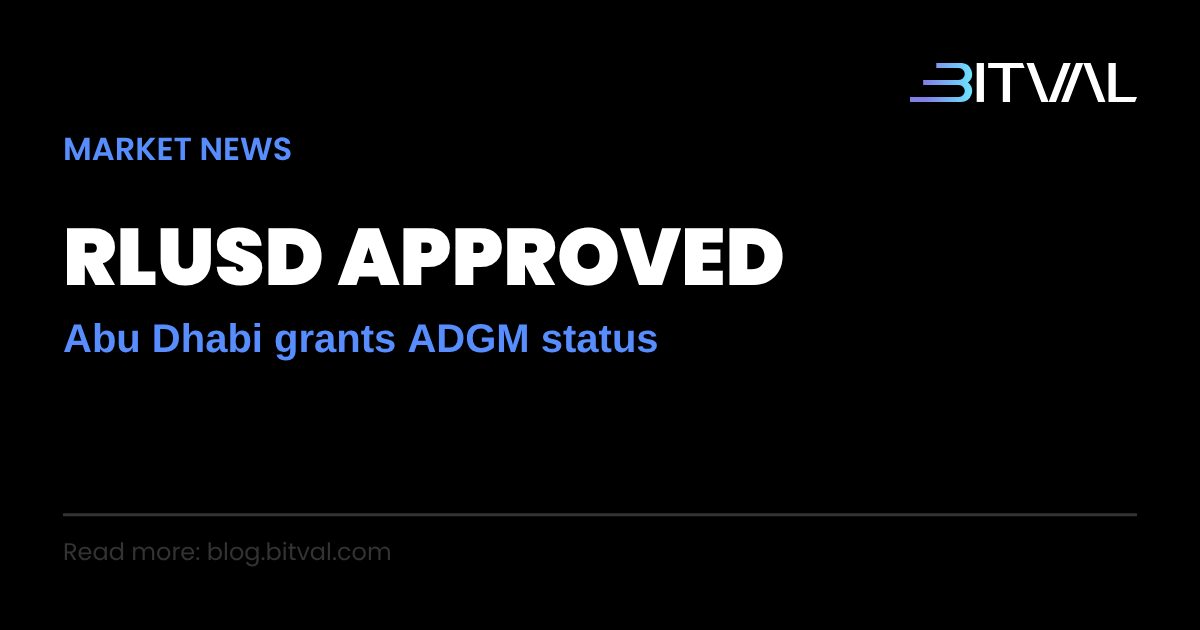
Abu Dhabi Global Market's Financial Services Regulatory Authority has recognized Ripple's dollar-pegged stablecoin, RLUSD, as an Accepted Fiat-Referenced Token, letting licensed firms in the jurisdiction use it for permitted activities. RLUSD has reportedly surpassed $1 billion in market capitalization since launch. The approval itself is a narrow regulatory event, but the category it falls under says something broader about how stablecoins are getting absorbed into formal financial regulation.
What "Fiat-Referenced Token" Status Covers
A fiat-referenced token designation typically requires the issuer to meet specific obligations: maintaining disclosed reserves backing the token one to one, regular reporting on those reserves, and compliance with the regulator's operational standards. It's a different status from simply being available to trade, since it means a regulator has reviewed the issuer's reserve management and disclosure practices and is willing to put its name behind that review.
Why This Fits a Larger Pattern
This approval comes as the UAE brings decentralized finance and broader Web3 activity under formal oversight, with platforms and infrastructure providers involved in payments, custody, and exchange services required to hold licenses by September 2026. Stablecoin-specific frameworks like the fiat-referenced token category are part of the same broader trend seen elsewhere, from the EU's MiCA framework to the US GENIUS Act, of regulators building purpose-built rules for stablecoins rather than treating them like generic crypto assets.
Why Reserve Transparency Matters Here
A stablecoin's entire value proposition depends on the reserve backing it 1:1 and being redeemable on demand. Formal regulatory recognition, with its disclosure and reserve requirements, functions similarly to proof of reserves for exchanges: it gives users a way to verify solvency claims rather than relying on the issuer's word alone, the same principle behind Bitval publishing its own fee schedule and policies rather than leaving users to guess. As more jurisdictions build these frameworks, the stablecoins that can meet the compliance bar are likely to see continued institutional adoption, while ones that can't may find fewer regulated venues willing to list them.
What to Watch
Whether this kind of formal recognition becomes the norm for major stablecoins across jurisdictions, or stays a patchwork that varies widely by region, will shape which stablecoins institutions are comfortable holding at scale. The underlying shift, stablecoins moving from unregulated instruments to formally licensed financial products, affects the infrastructure that spot and margin markets run on industry-wide, including on Bitval.
If you want to trade spot and margin markets, you can create an account on Bitval Exchange.
This article is for informational purposes only and does not constitute financial advice. It does not recommend holding, trading, or acquiring any specific stablecoin or asset.