Solflare Reports a Staking Validator Security Incident: What Stakers Should Know

In today's crypto news, the Solflare wallet has reported a security incident affecting the validator behind its SOL staking feature. According to a report on its update from 28 October, the company says user funds were not touched and that rewards are paused while delegated stake is moved to a new validator. These are the company's own statements, and they have not been independently verified.
What Was Reported
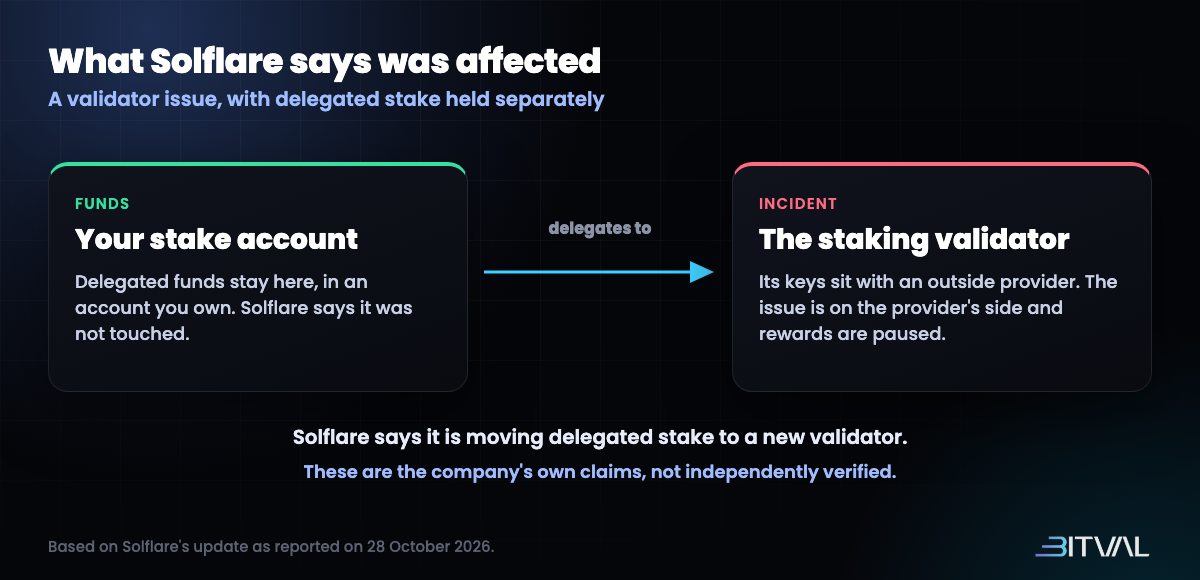
Solflare shared the update on its official X account. It says the keys for the validator are held by an outside staking provider, and that the security issue is on the provider's side. The nature of the problem has not been described, and no timeline has been given for the pause or the migration.
Staking on Solana works by delegation. A holder keeps their funds in their own stake account and assigns that stake to a validator, which takes part in running the network and earns rewards. The Solana protocol does not let a validator, or anyone holding its keys, move delegated stake, which is why Solflare says funds were not at risk.
What Solflare Says It Is Doing
Based on the report, the company has:
- Paused staking rewards on the affected validator.
- Started moving delegated stake to a new validator.
- Planned an app update with a guided migration, with a date still to be announced.
- Begun developing a compensation plan for users who migrate, with no amount or timing yet.
What Solflare Tells Users
The report says no action is required today. Users are told to keep their stake in their own accounts until the app update arrives, and that migration happens only inside the app. Solflare says it will never contact users by direct message or send links. That last point matters, because incidents like this are often followed by scams.
Watch for Scams After an Incident
News of a security problem is a common opening for fake messages that claim to offer a fix, a refund or a "migration". Treat any unsolicited message as suspect, never enter a recovery phrase on a website, and go only to official channels. See how to spot phishing, and keep your accounts protected with two-factor authentication.
What the Case Shows About Staking
Staking adds a few risks to holding. The validator you choose can have outages or security problems, rewards can pause, and moving to another validator takes time. Self-custody means the keys for your funds stay with you, which is one reason holders weigh it against leaving assets on a platform, as covered in self-custody vs exchange custody.
What It Means for Bitval Users
This incident concerns one wallet's staking feature and does not involve Bitval. For those using Bitval, it is a reminder to keep long-term holdings and trading balances in the places that suit each purpose, and to protect every account with two-factor authentication. Check Bitval's markets for which assets are available, since this article does not suggest any asset or network is or is not supported.
You can create a Bitval account to see the markets Bitval currently offers.
This article is for informational purposes only and does not constitute financial advice. It summarises a company statement as reported by CoinGabbar, which may change. Crypto assets are volatile and carry a risk of loss.
Sources: CoinGabbar: Solflare security incident hits validator, user funds are safe