Best Crypto Exchange for Beginners: A First-Week Checklist
Choosing the best crypto exchange for beginners is only the first step. Here's a simple checklist for your first week, from funding to your first withdrawal.
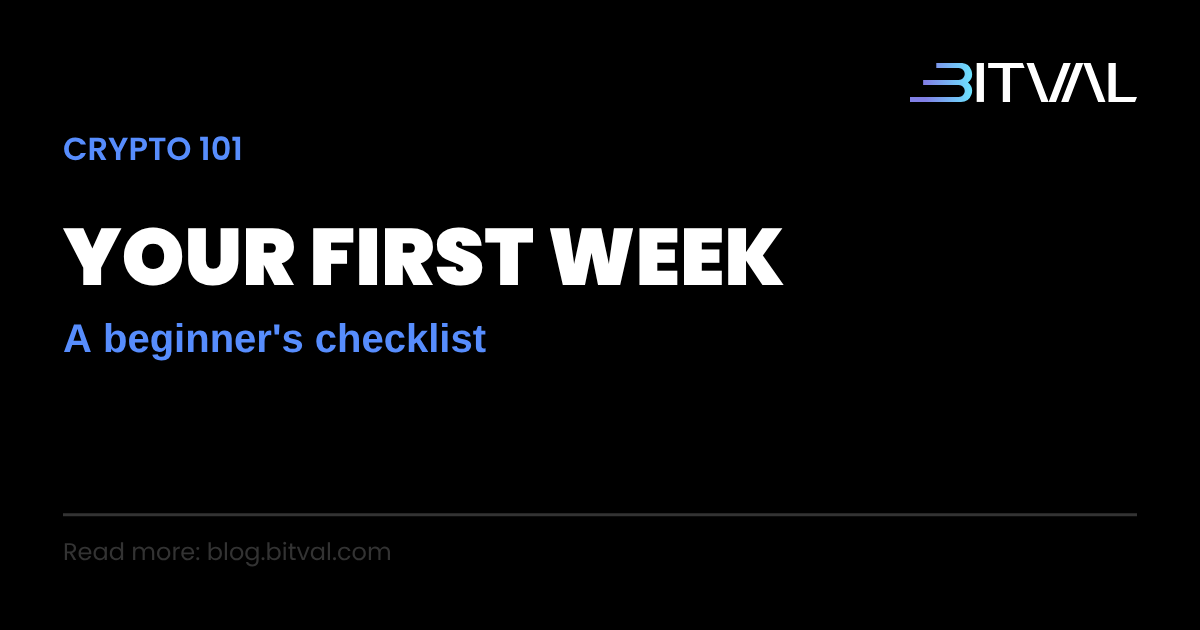
Choosing the best crypto exchange for beginners is only part of getting started. What you do in the first week matters just as much, and a short checklist can help you avoid the most common early mistakes.
Day One: Check Before You Commit
Before depositing anything, find the fee schedule and read it. Look for maker and taker rates, and for how withdrawals are charged. On Bitval, spot fees are 0.12% maker and 0.145% taker, deposits are free, and withdrawals carry a network cost plus a flat fee.
Understand How Funding Works
Funding methods differ between platforms. Bitval deposits are crypto-only, so you need to already hold crypto in a wallet or on another platform to fund an account. Knowing this up front avoids a surprise when you get to the deposit page.
Secure Your Account
Use a strong, unique password and turn on any additional security options the platform offers. Account security is the part of the process you control completely, and it is worth doing before any funds arrive.
Make a Small Test Deposit
Send a small amount first and confirm it arrives, checking that the network matches on both sides. This catches address and network mistakes while they are cheap to fix.
Place a Small First Trade
Start with an amount you would be comfortable losing while you learn. Try a limit order as well as a market order, and look at the order book first so you can see how much size sits near the current price.
Read Your First Fee
After the trade, look at the fee charged and check that it matches the schedule you read on day one. This is the quickest way to see whether the platform behaves the way it describes itself.
Plan Your Withdrawal Early
Know in advance how withdrawals work. On Bitval, you can trade straight away and complete verification when you withdraw, so it helps to know that step is coming and what it involves before you need your funds.
Keep Records
Note the dates, amounts and fees of your trades from the start. Good records make later questions much easier to answer.
What to Avoid in Week One
- Trading with leverage before you understand liquidation
- Depositing more than you can afford to lose
- Sending funds without checking the address and network
- Acting on tips from strangers or unsolicited messages
You can create a Bitval account and work through this checklist with a small first deposit.
This article is for informational purposes only and does not constitute financial advice. Trading crypto carries risk, including the loss of your capital.