Ethereum Delays Glamsterdam Test After Researchers Flag Gas Rule Risk to Existing Contracts


In today's crypto news, Ethereum developers have called off the activation of the Glamsterdam upgrade on the Hoodi test network, which was scheduled for 26 October, according to CoinDesk. Security researchers had flagged that proposed changes to gas accounting could alter how some existing smart contracts behave.
What Was Delayed
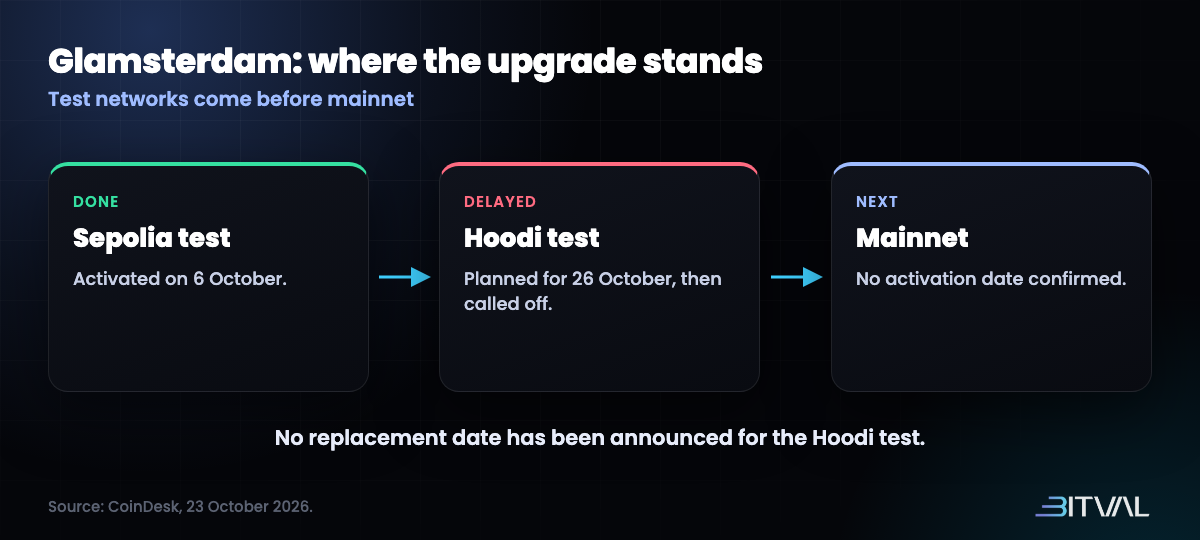
Glamsterdam is a planned Ethereum network upgrade. Upgrades are rolled out on test networks first, so problems show up before they reach the main network. The Sepolia test network activated the upgrade on 6 October. The Hoodi activation was called off, along with a planned increase of the test network's gas limit to 200 million. No replacement date has been announced, and the main network has no confirmed activation date.
What the Researchers Found
Gas is the fee unit that pays for computation on Ethereum. The security firm ChainSecurity published an analysis on 13 October of proposed changes to how gas is charged, including a proposal known as EIP-8037 that changes the cost of creating new state records. The aim is to limit the growth of Ethereum's stored data as the network handles more activity.
ChainSecurity found that, combined with a related proposal, the change could affect contracts that catch a failed operation and carry on. Such a contract could end up with a different amount of gas than it expects. That could make some errors permanent or cause otherwise valid operations to fail. Developers decided to postpone the activation at an All Core Developers Execution meeting while they investigate.
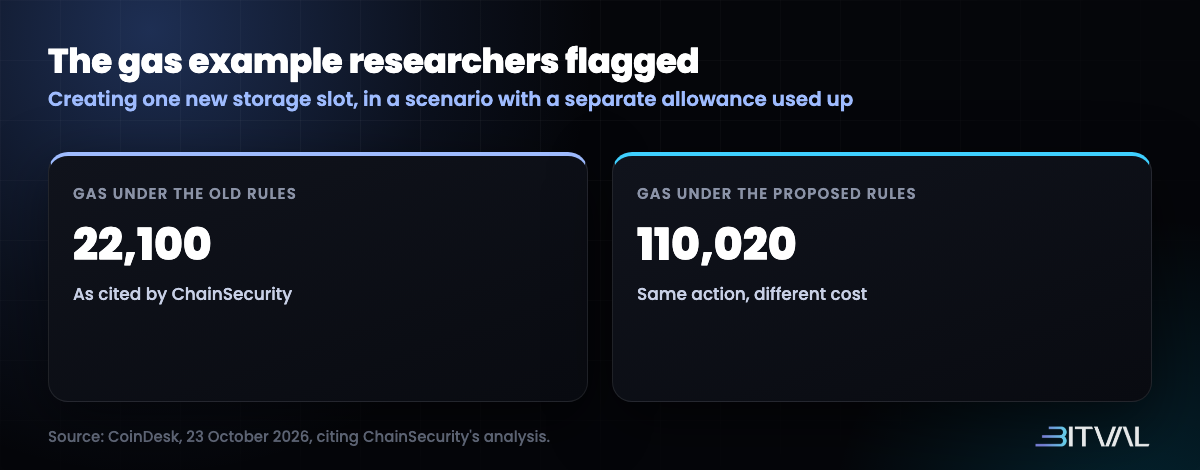
One example cited was creating a new storage slot, which could cost 110,020 gas under the new rules in a case where a separate allowance has been used up, compared with 22,100 under the old rules.
What Has Not Been Shown
CoinDesk reports that ChainSecurity demonstrated the mechanisms but has not publicly shown that a major production protocol can be exploited. The article says there is no indication that existing contracts are being exploited through these changes. The delay is a precaution at the testing stage.
Why Testing Delays Are Normal
Network upgrades on a system that holds large amounts of value are slow on purpose. Test networks exist to find exactly this type of problem, and a postponement after researchers raise a concern is the process working as designed. For users, the practical effect today is limited, because the upgrade has not reached the main network.
What It Means for Traders
Upgrade timelines can slip, and traders who plan around a specific date should expect that. A delay does not set prices or guarantee any market outcome, and this article does not suggest any move in the price of ether. For those using Bitval, check the markets Bitval offers for the assets that are available, and keep position sizes in line with the risk you accept, as covered in position sizing.
Earlier this month we covered the first Glamsterdam test on Sepolia. You can create a Bitval account to see the markets Bitval currently offers.
This article is for informational purposes only and does not constitute financial advice or a prediction of future prices. It summarises a press report, which may change. Crypto assets are volatile and you can lose some or all of the money you trade with.
Sources: CoinDesk: Ethereum delays Glamsterdam test after security devs flag risk to existing contracts